
Do you ever feel like you're bouncing from project to project like a ping-pong ball?

Excited about one thing, then a new idea catches your eye, then another — until you look around and there's a little pile of half-started things, and that quiet voice pipes up: maybe I'm just a flake.
First, I want you to know: that feeling is incredibly common among curious, creative makers — and it doesn't mean you're bad at follow-through. It usually means the opposite. Your head is full of ideas. That's a good thing.
So here's what I think is really going on underneath it.
You want to try so many different things —
a technique you saw and loved
a little variation that's been rattling around your head
maybe even an idea for designing something of your own.
But every time you imagine actually doing it, the math feels impossible.
Because if trying a new technique means starting a whole new full-size quilt, that's months of work — months you don't have, on top of the projects you've already got going. So the new idea gets shelved. I'll get to it once I finish these. (Except the pile only ever grows.)
And if I look a little deeper, there's a second, quieter worry under that one: even if I did make the time…
what if it doesn't turn out the way I see it in my head?
What if I waste the fabric?
So the safest thing is to stick to the patterns you know will work, and keep that bolder, more you idea tucked away for someday.
I want to hand you a little practice that gently dissolves both of those fears at once. I call it the micro-experiment.
So here's the thing. We tend to think trying a new technique means committing to a Real Project. But what if you didn't?
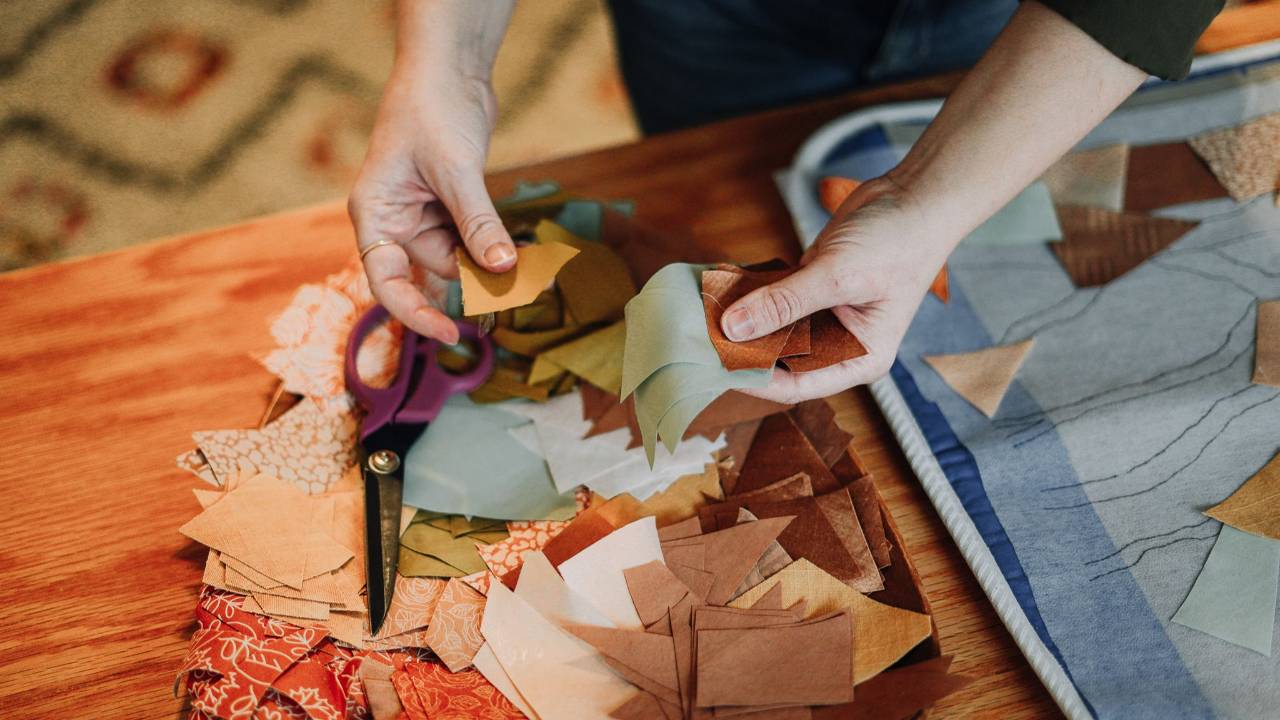
A micro-experiment is a tiny test of a single idea — smaller than a block, sometimes just a little scrappy swatch — and it's not meant to become anything at all. Its only job is to let you ask "what if?" and find out fast.
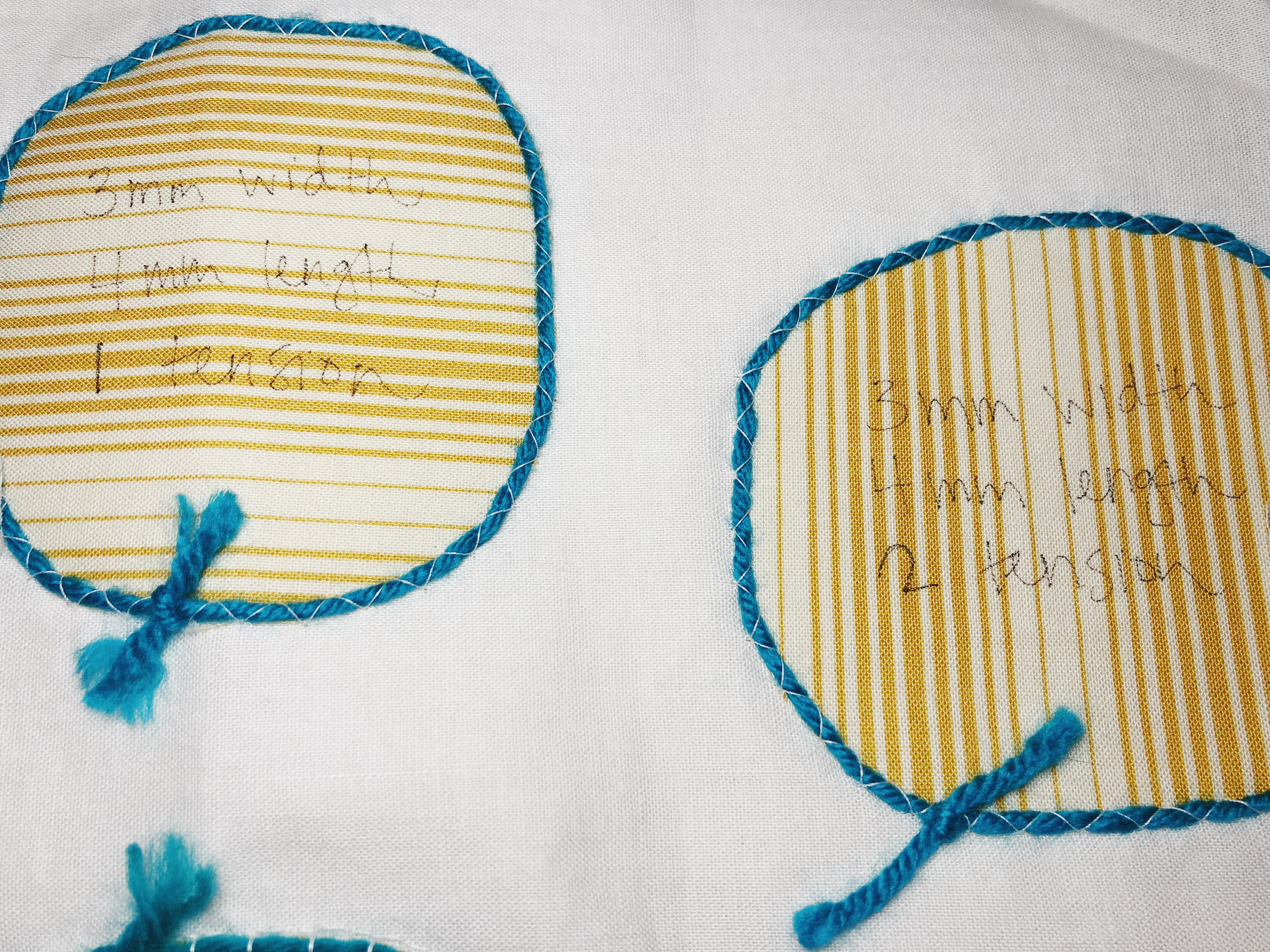
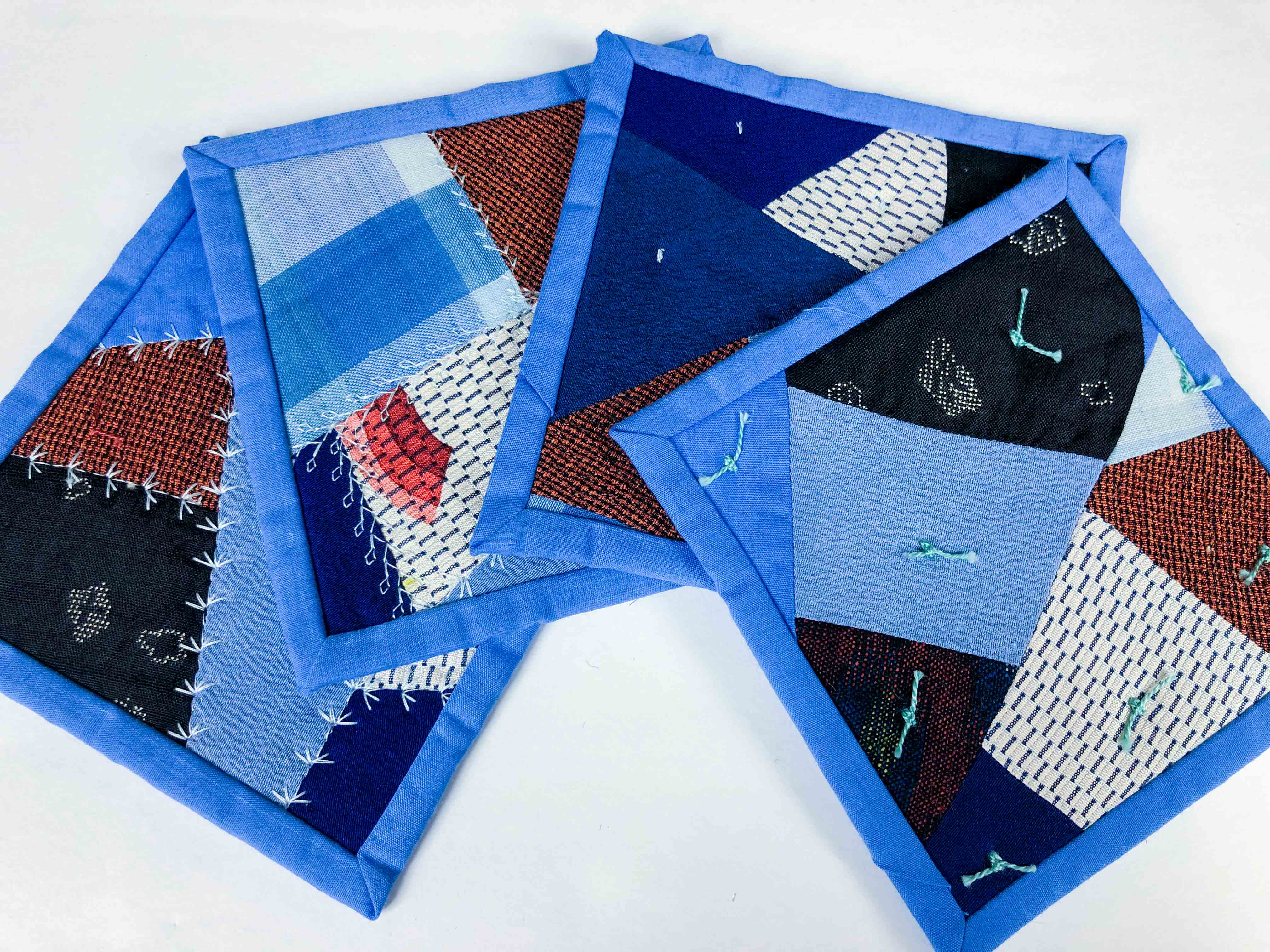
I do these constantly. I've got one I made just to see what a certain yarn would look like couched around an edge — I literally wrote the stitch settings right on the fabric. Another little square I use as a tea coaster started as a test of a reverse-appliqué stitch for one of my classes. To anyone else they look like a scrappy mess. But each one taught me exactly the one thing I needed to know — and a few of them grew into some of my favorite full-size quilts later on.
Here's what becomes possible when you give yourself permission to play this way.
Imagine a free afternoon and a scrap you don't care about. You want to know what it'd look like to add a little embroidery around an appliqué edge — so you just… try it.
One small piece.
An hour, maybe.
By the end you know: yes, I love this — or nope, not for me — and either way you've lost nothing. No months. No wasted yardage. No half-finished giant on the pile nagging at you.
And here's the part I most want you to hear, because I know developing your own style is something so many of you quietly long for: this is exactly how a style that's recognizably yours gets built.
You try something small. Next time you tweak it. You weave in the stitch you loved, or the colors from the tile you photographed on a trip, or an idea from another technique entirely. Iteration is how craftsmanship and a signature look actually develop — and micro-experiments let you do in a summer what would otherwise take years of full-size projects. One small "what if" at a time, the work slowly starts to look like you.
So this week, I'd love to challenge you to try just one. Pull something from your scrap bin — those orphan blocks and bits you don't care about are perfect low-stakes material — and play. Ask one "what if?" and see what happens. It doesn't have to work. It doesn't have to become anything. It just has to teach you something.
I'd genuinely love to hear what you come up with. Hit reply and tell me: what's one micro-experiment you could try this week? I read every one, and I can't wait to hear what's been rattling around in your creative head.
Come play, Shannon
P.S. If you'd like a fun, low-stakes place to start, our Scrappy Appliqué patterns are made for exactly this kind of playful experimenting — small, forgiving, and endlessly your own.
Explore Scrappy Applique Patterns

Responses