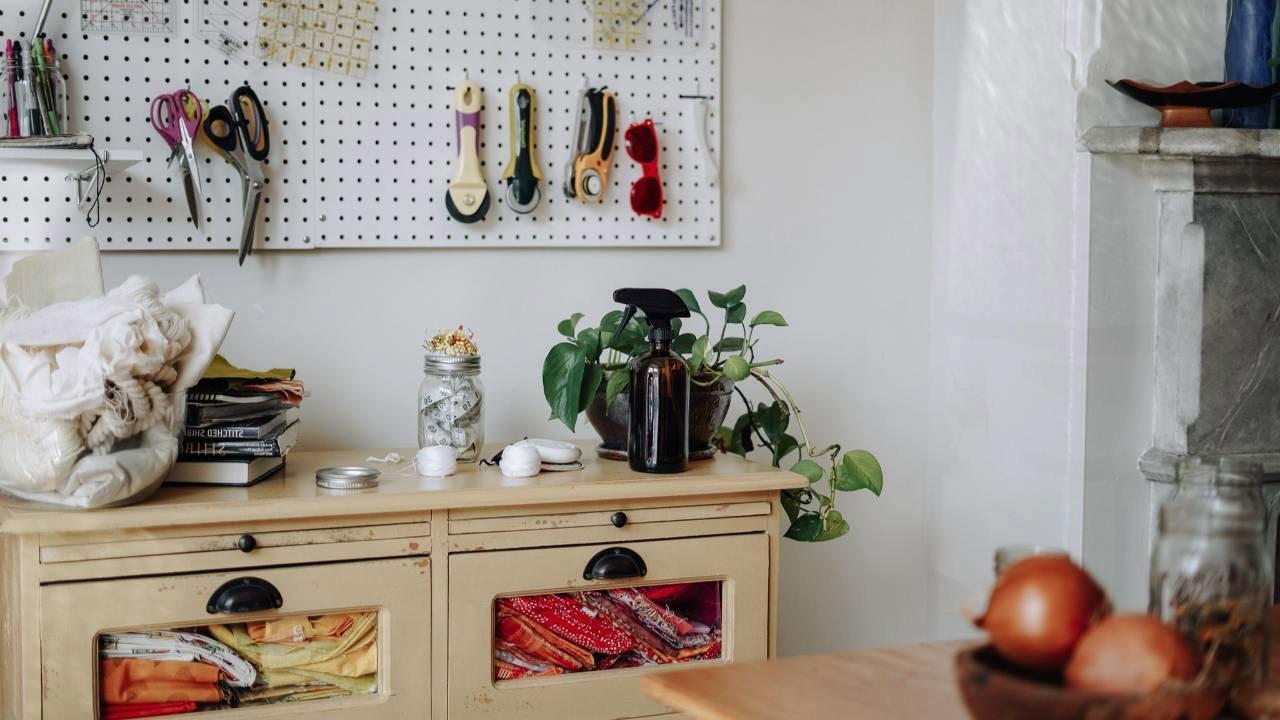
A Studio, Not a Sewing Room
Aug 25, 2026Close your eyes for a second and picture walking into the space where you sew. Fabric strewn across the table, a stack of half-finished projects in the corner, scraps on the floor, the chair you don't quite like enough to keep anywhere else. What does walking into that space make you feel?
For a lot of us: stressed, cramped, a little scattered. And here's the thing — that feeling shapes what you make there. So today, let's get practical about setting up a space that invites you in.
Quick distinction I care about: a sewing room is where your machine happens to live. A studio is a space you've set up on purpose to make you feel the way you want to feel when you create. You're the resident artist, and only you can set it up — because it's about how the space makes you feel, not how it looks to anyone else. (And no, it does not need to be Pinterest-perfect. If piles of fabric and mismatched furniture make you feel alive, that's your studio.)
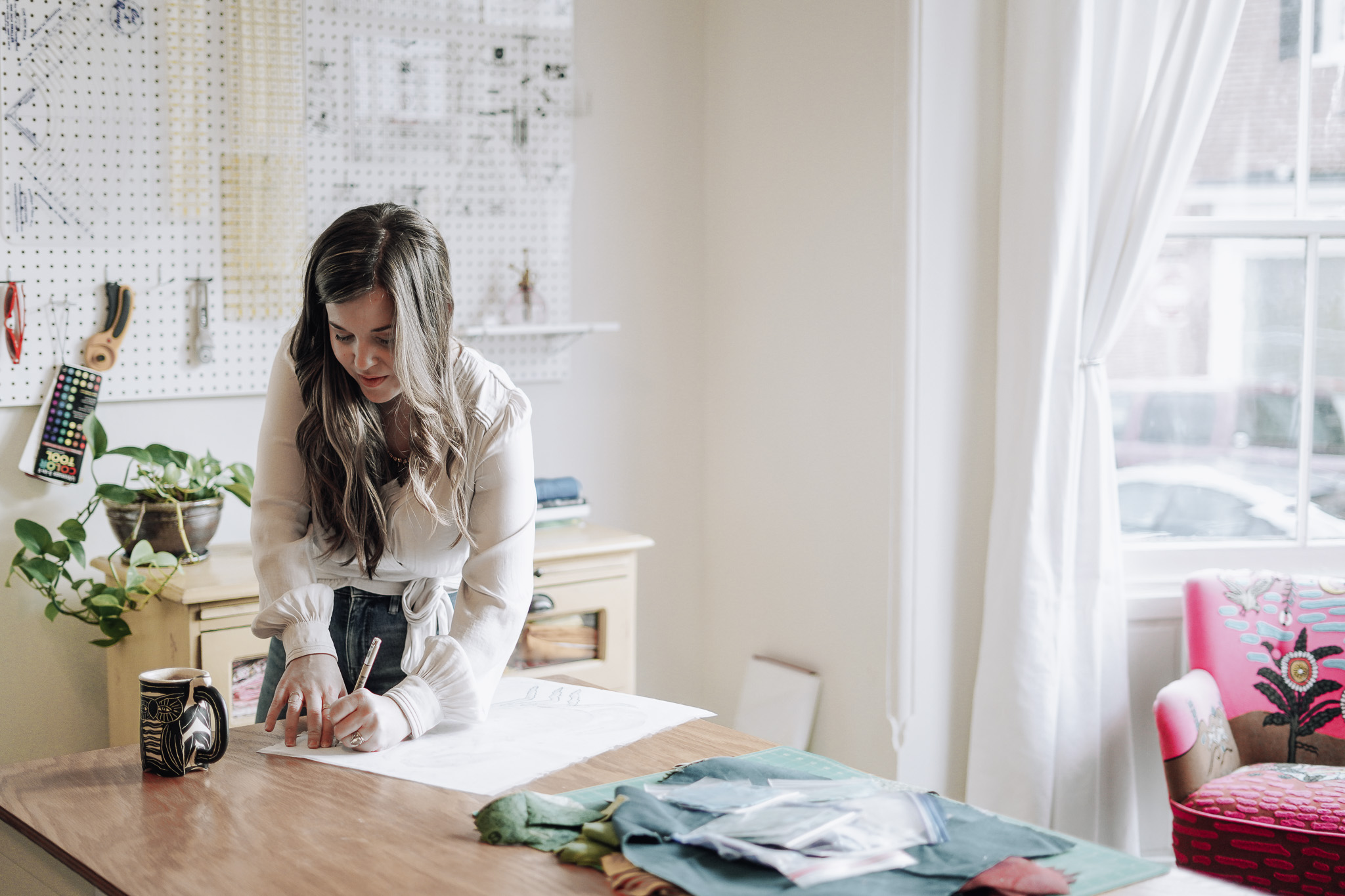
Want to see mine? I filmed a full tour of our studio a couple of years ago — that's from 2022, back when I was pregnant with Jack, so don't be alarmed, this is not a baby announcement! The space has evolved since, but the thinking behind it is all there.
The components — and how to organize them
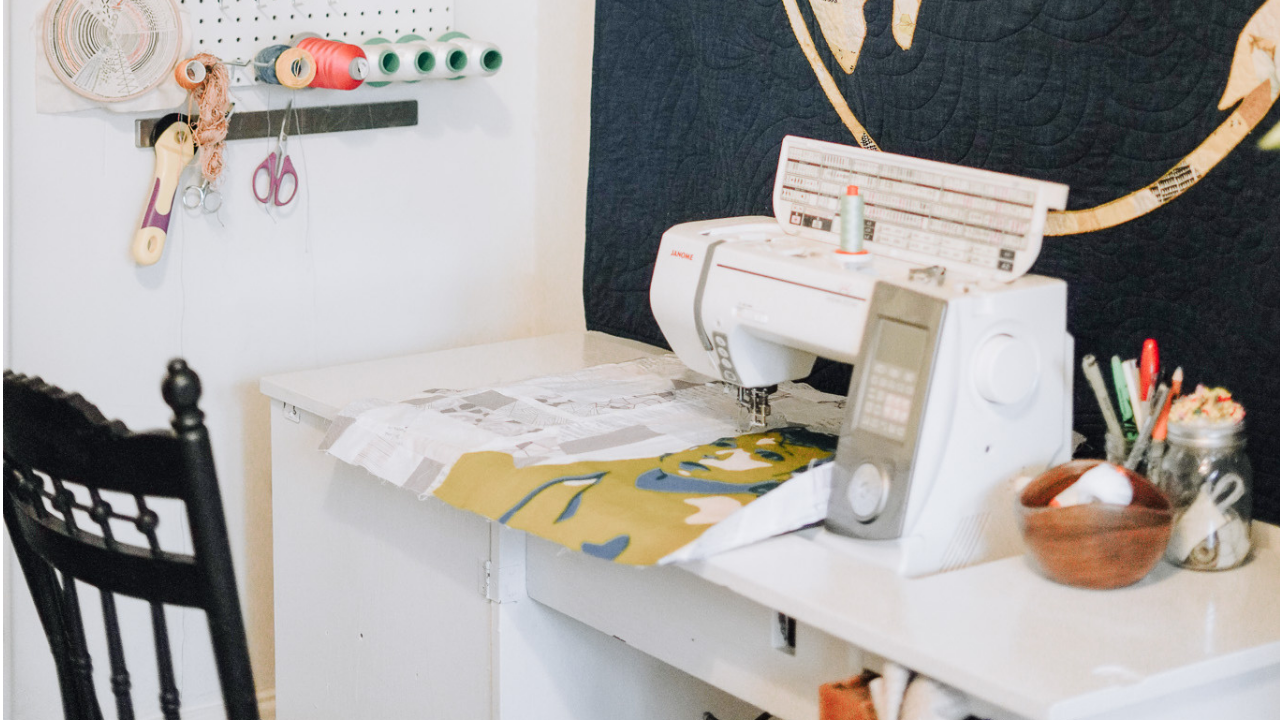
Your sewing station. Ideally your machine stays set up so you can just sit down and go. If it can't, make setup as fast as possible — everything you need in a pretty box or a nearby cabinet so you can be stitching in under two minutes.
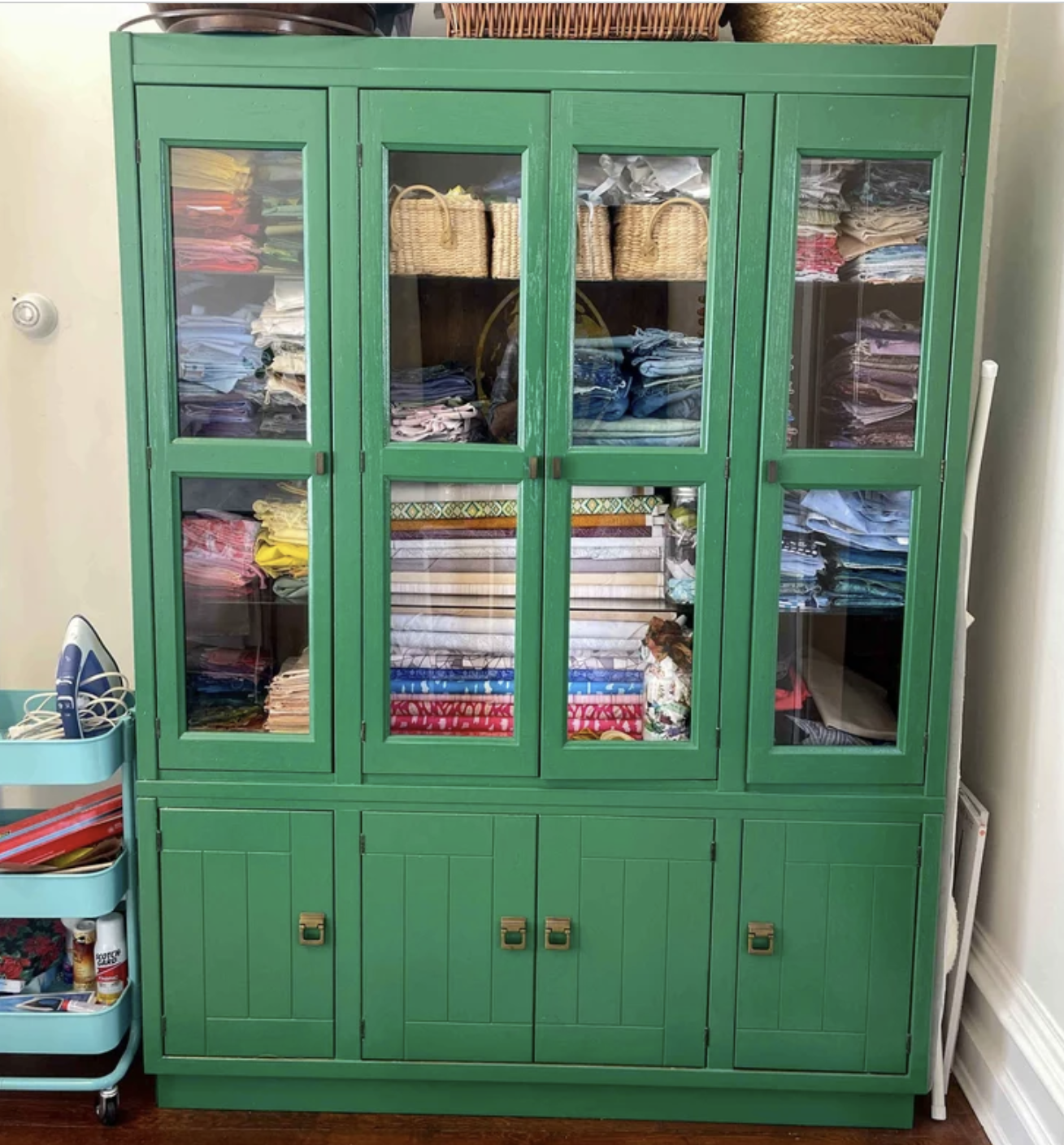
Your fabric stash. Store it however makes it easy and fun to peruse — open shelving, a cabinet, bins. I organize mine by color, which makes fabric pulls so much faster (need an aqua? head straight to the aqua shelf). You might prefer to sort by type — batiks together, novelties together. There's no right way; just make it easy to find what you're reaching for. I walk through my whole system in this video on organizing your fabric.
Scrap storage. Scraps are often what tips a studio into chaos. I keep three scrap baskets — one warm, one cool, one neutral — and toss leftover binding strips into a couple of big mason jars. A simple system you can maintain beats a fancy one you can't. (And if you're wondering what makes the cut for those baskets — I shared my 4-inch rule earlier this month. Pick your number; the baskets stay manageable.)
Your works in progress. Most of the time, when a studio feels messy, it's the WIPs that are out of control — and they can be a quiet source of stress that keeps you from starting the things you're actually excited about. Gather them up, and for each one ask: do I still care about this? If yes, it goes in a WIP bin (or, like me, a WIP cart out in the open — my rule is when the cart gets too full, I spend a weekend knocking a few out). If no — you are allowed to abandon a project. Thank it for what it taught you and let it go.
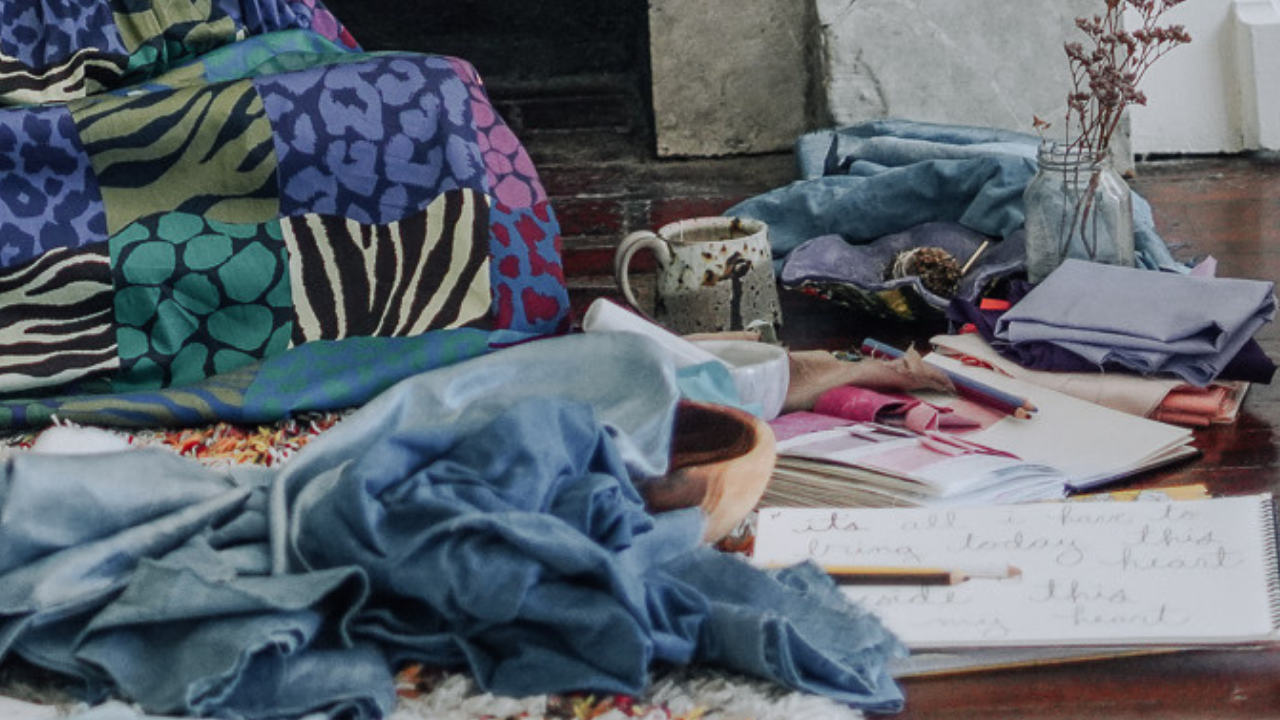
Your experiment bin. This is where abandoned WIPs, orphan blocks, precuts, and fabric you no longer love all land. It becomes your no-pressure playground — when you want to try a new technique, you pull from here, so there's no worry about "wasting" good fabric. You just follow a whim.
A design wall. Not required, but wonderful for stepping back and seeing the big picture. Mine is two 4×8 pieces of foam insulation wrapped in batting; a first one can be as simple as a length of flannel tacked to the wall with pushpins and rolled away when you're done. (NEW) Full instructions (and a few options by budget) in How to Make a Design Wall.
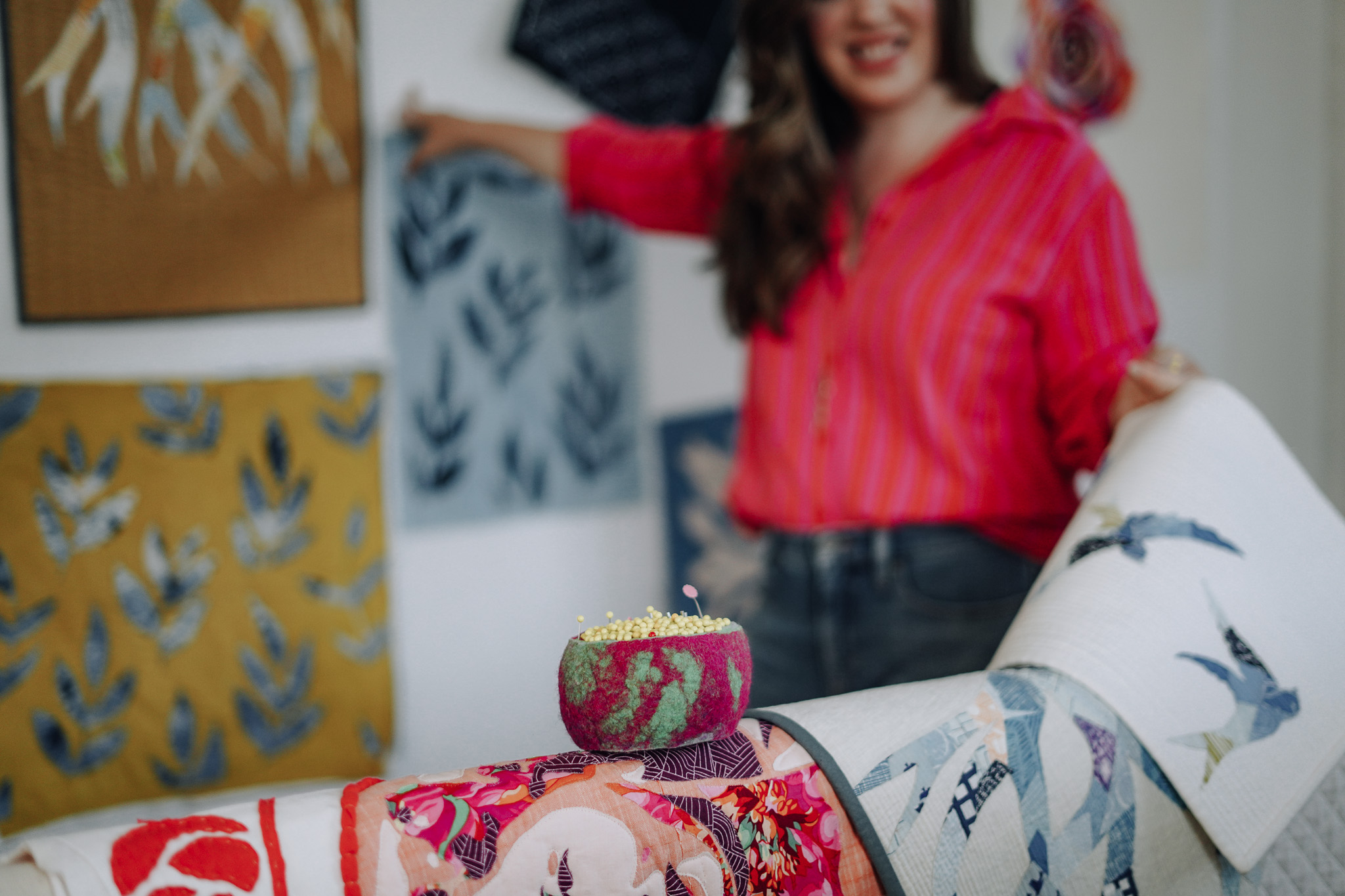
A little inspiration space. A corkboard, or the back of a door, where you pin fabric combos that surprised you and images that light you up.
No dedicated room? No problem.
A mobile studio works beautifully. Use the dining table and store everything in the closet or a nearby cabinet in pretty baskets you enjoy pulling out. The whole game is lowering the barrier to entry — fast to set up, fast to put away — so you'll actually sew in the spare moments. Your studio doesn't need walls. It needs intention.
Make it a little sacred
One last thing, because it matters: your creative time is sacred, not stolen. A small ritual helps you feel that — greet the room, open the blinds, light a candle or make tea in a favorite mug, and take a breath of gratitude before you begin. It tells your brain: now it's time to create. And when perfectionism sneaks in, remember the space only has to serve one person — you.
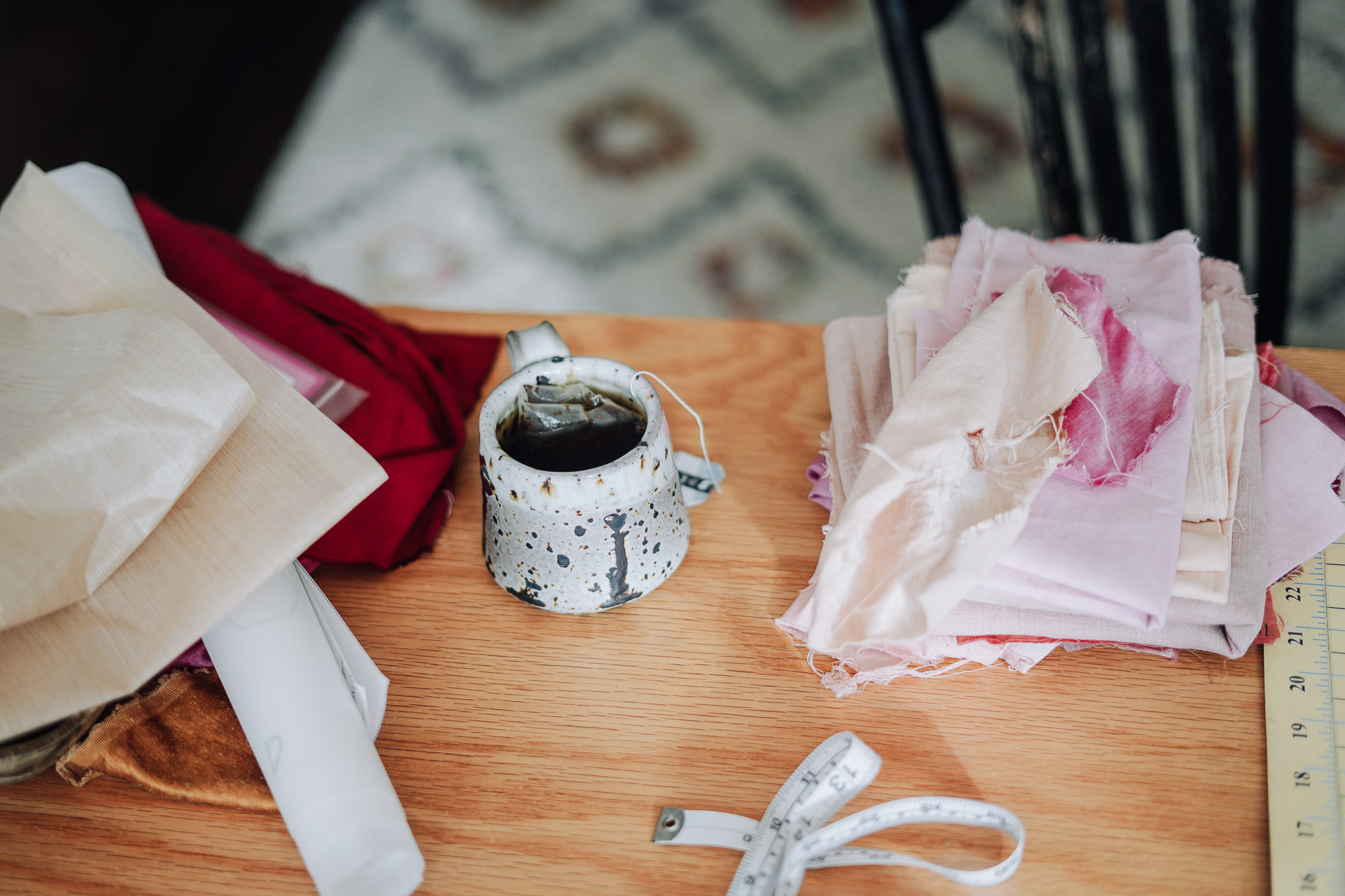
You deserve a space that makes you want to walk in and make something. Because here's the deeper truth underneath the shelving and the scrap baskets: setting up a studio — any studio, at any budget — is how you tell yourself that your creative work matters. That you're the resident artist. That this is not a someday-hobby. It's yours, and it's now.
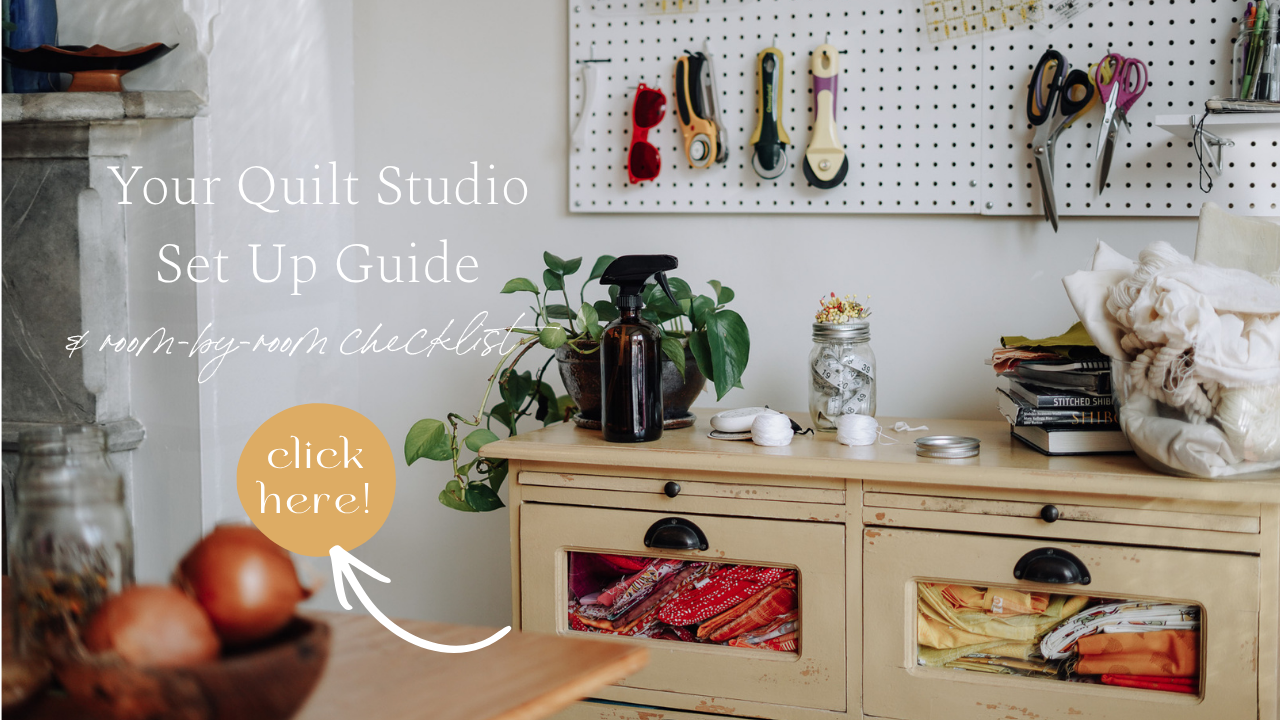
Want help setting yours up? I put everything from this post — the components, the feelings exercise, the mobile-studio setup — into a free Studio Setup Guide & Checklist you can print and work through corner by corner.
I'd love to hear how you set yours up — what's your favorite corner, or your smartest small-space solution? Tell me in the comments on Instagram or Facebook.