When Is a Scrap Too Small to Save?
Aug 04, 2026You know the moment. You've just finished a project, you're tidying your cutting table, and you're holding a little piece of fabric over the scrap bin, thinking: is this worth keeping?
Save everything, and the scrap situation slowly takes over your studio. Toss too much, and you feel that little stab of guilt — because throwing away something that beautiful just feels wrong.
I get asked about this all the time — how small is too small? Should I keep those one-inch bits? Is anything under five inches trash? So today I'm sharing my rule of thumb, how to know when to break it, and (my favorite part) what those scraps can actually become.
My rule of thumb: 4 inches
Here's my line: if a scrap is at least 4 inches on any side, I save it.
It doesn't need to be 4x4 — a long 4-inch strip counts, an odd wedge with one 4-inch edge counts. Anything smaller than that, I let go. Into the trash it goes, guilt-free (mostly — I'll give you some lovely alternatives at the end of this post).
The exception: love. If it's a fabric I'm truly smitten with — one of those prints I'd rescue from a burning building — I'll save it down to about 2 inches. Love changes the math. It always does.
Your rule depends on how you make
Now — remember, there's no right or wrong here. My 4-inch rule fits how you sew. If your work is different, your rule will be too.
My friend Giuseppe (you may know him as @giucy_giuce) does exquisite tiny piecing, and he saves scraps down to 1½ inches — because in his hands, a 1½-inch piece isn't a scrap at all. It's a building block. If you do tiny piecing, miniatures, or small collage work, smaller pieces absolutely earn their keep.
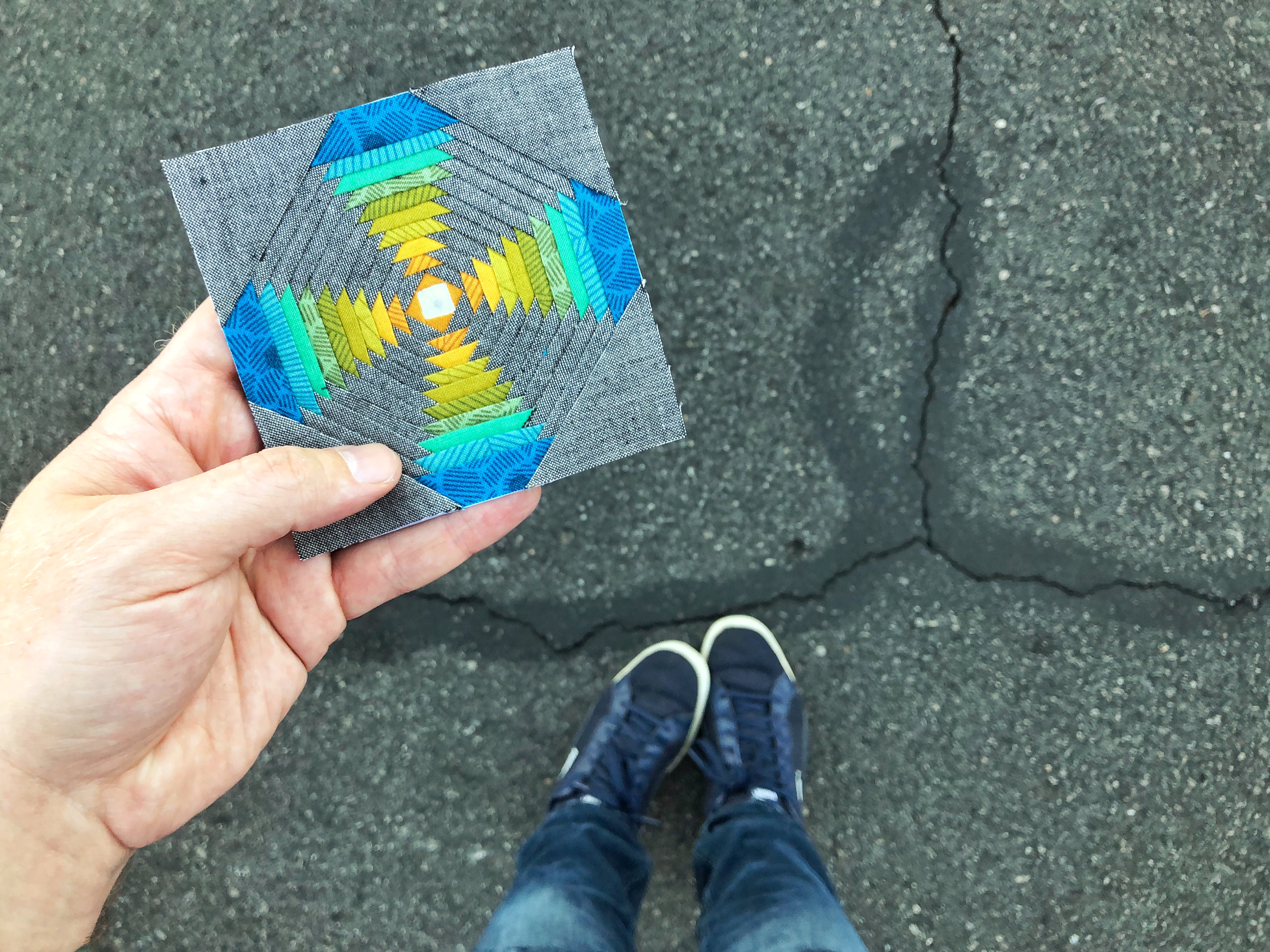
I know myself: I'm not going to use pieces smaller than 4 inches unless they're really special, and definitely nothing smaller than 2. Your number might be different — and it should be, if your work is different.
So here's the real takeaway: pick your number. Base it on the kind of work you actually do (or genuinely want to do), and then let the number make the call. That's the quiet magic of having a rule of thumb — it takes the emotion out of that moment over the trash can. No more standing there deliberating over every little piece. Measure, decide, move on... and get back to the fun part.
How I organize mine: three baskets
Once a scrap makes the cut, it goes into one of three baskets in my studio:
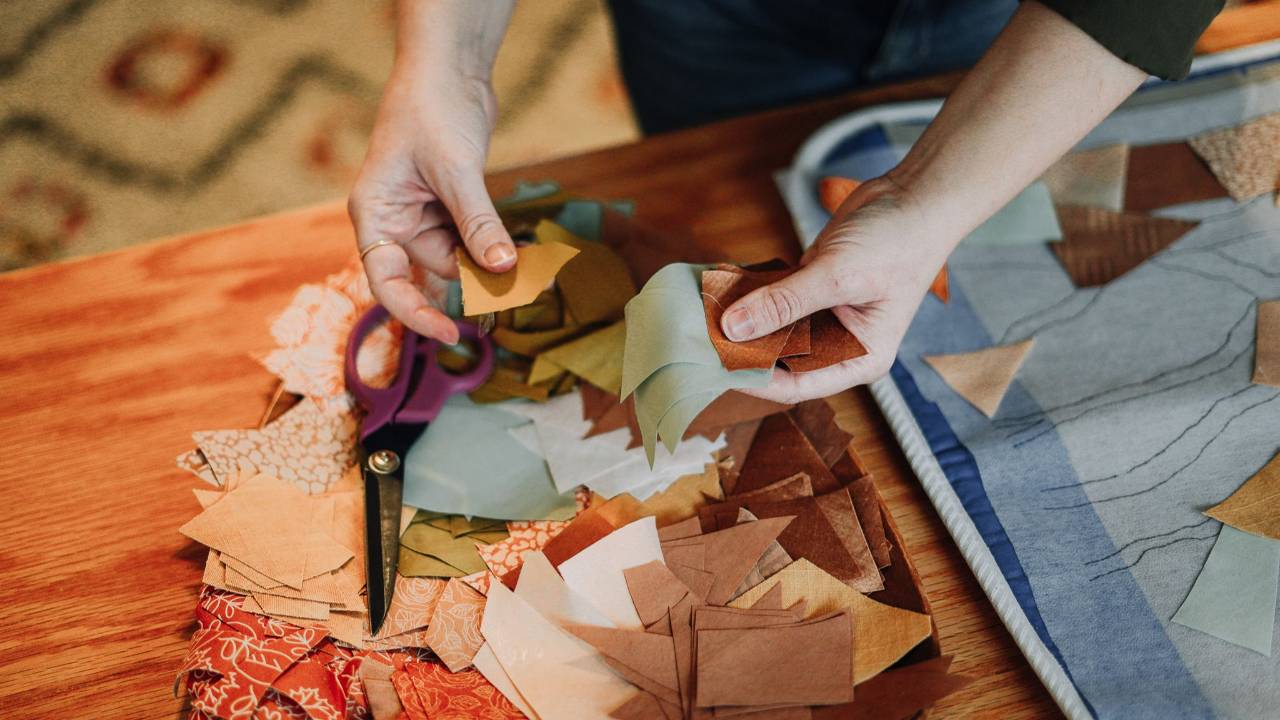
- Warm colors — the reds, oranges, yellows, pinks
- Cool colors — greens, blues, purples
- Neutrals — whites, creams, grays, browns, blacks
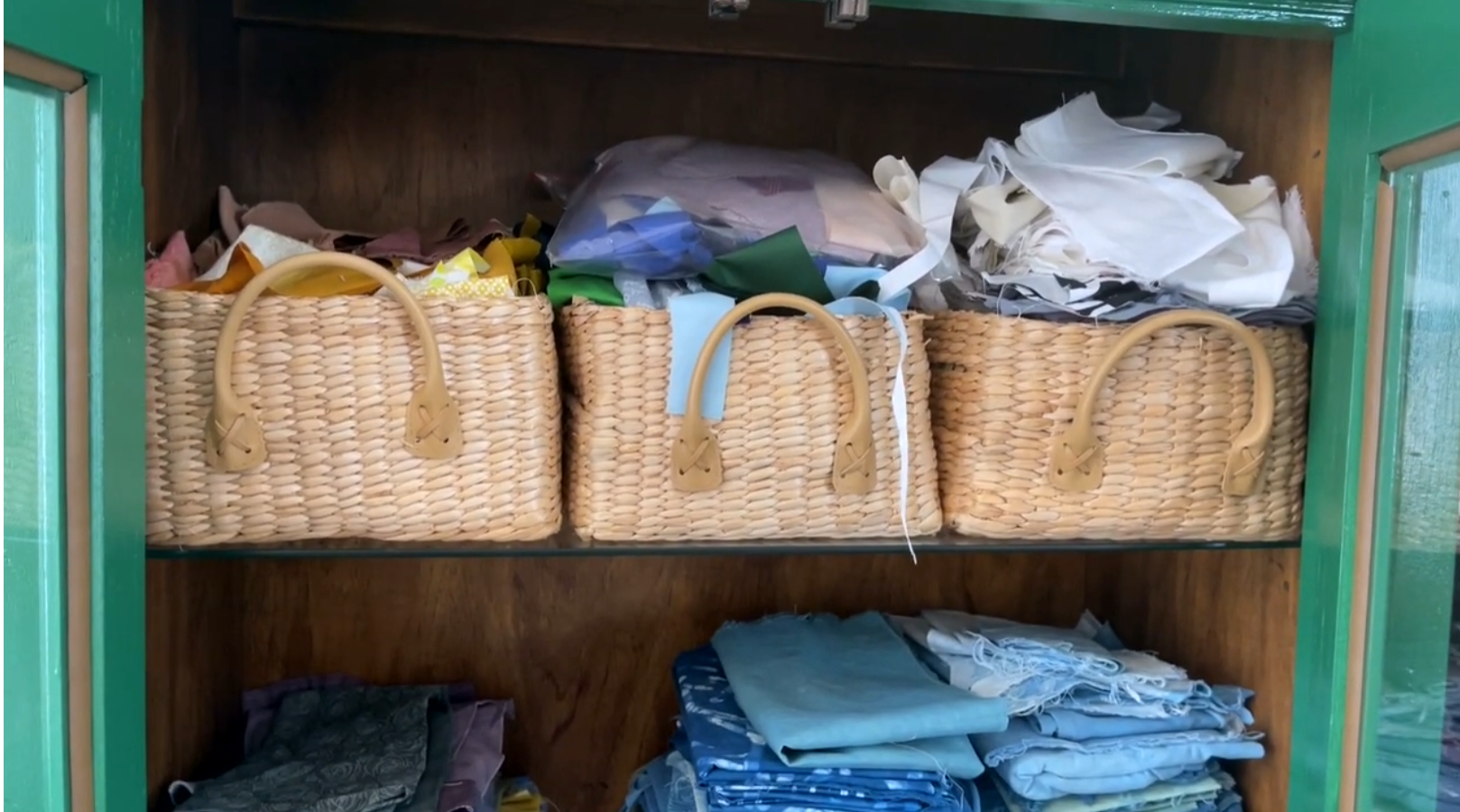
That's the whole system. When I'm collaging, I can grab the temperature I need and start pulling. No digging, no chaos. (I'll be sharing more about how I set up my studio later this month — this is just the corner of it I use most.)
Here's the secret hiding in that bin
Think about which fabrics end up as scraps: the ones you actually used. The ones you chose, loved, and built projects around — sometimes years of favorites, all in one basket.
Some of the prettiest fabric in your studio is already in your scrap bin. You just haven't been able to see it as material — until now.
What those scraps can become
This is where I get to show you my favorite thing. Scrappy Appliqué™ comes down to two ingredients: one simple shape, and a gorgeous texture built from your scraps.
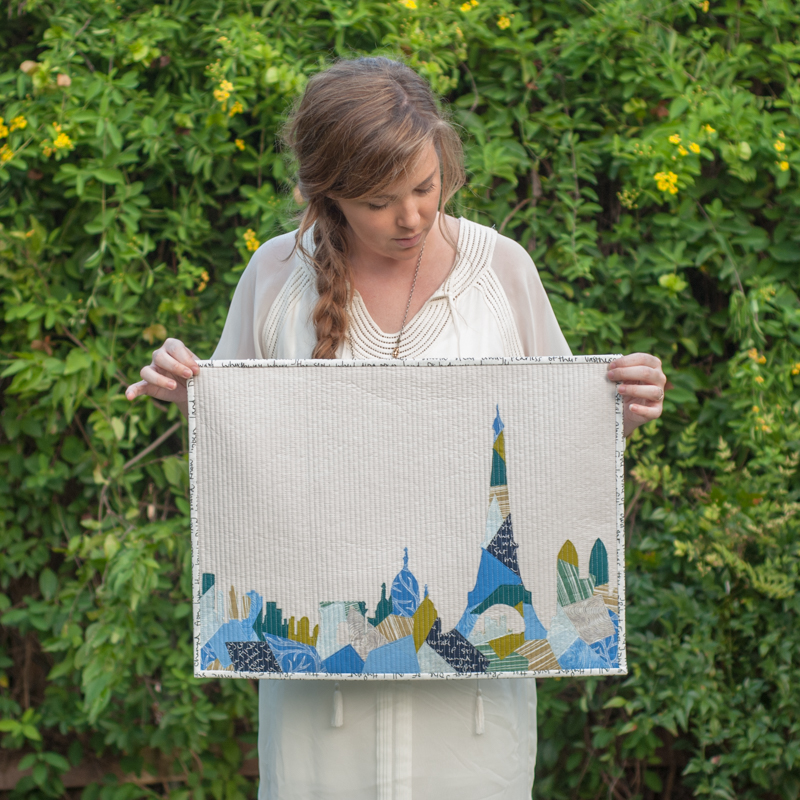
You take a simple silhouette — a whale, a leaf, a skyline — and instead of cutting it from one fabric, you fill it with a collage of scraps, overlapped and layered, raw edges and all. And here's the beautiful part: the small scraps make the richest texture. When each piece only shows a couple of inches of itself, you stop seeing individual fabrics and start seeing one shimmering surface — prints that would never sit together in a traditional quilt suddenly sing side by side.
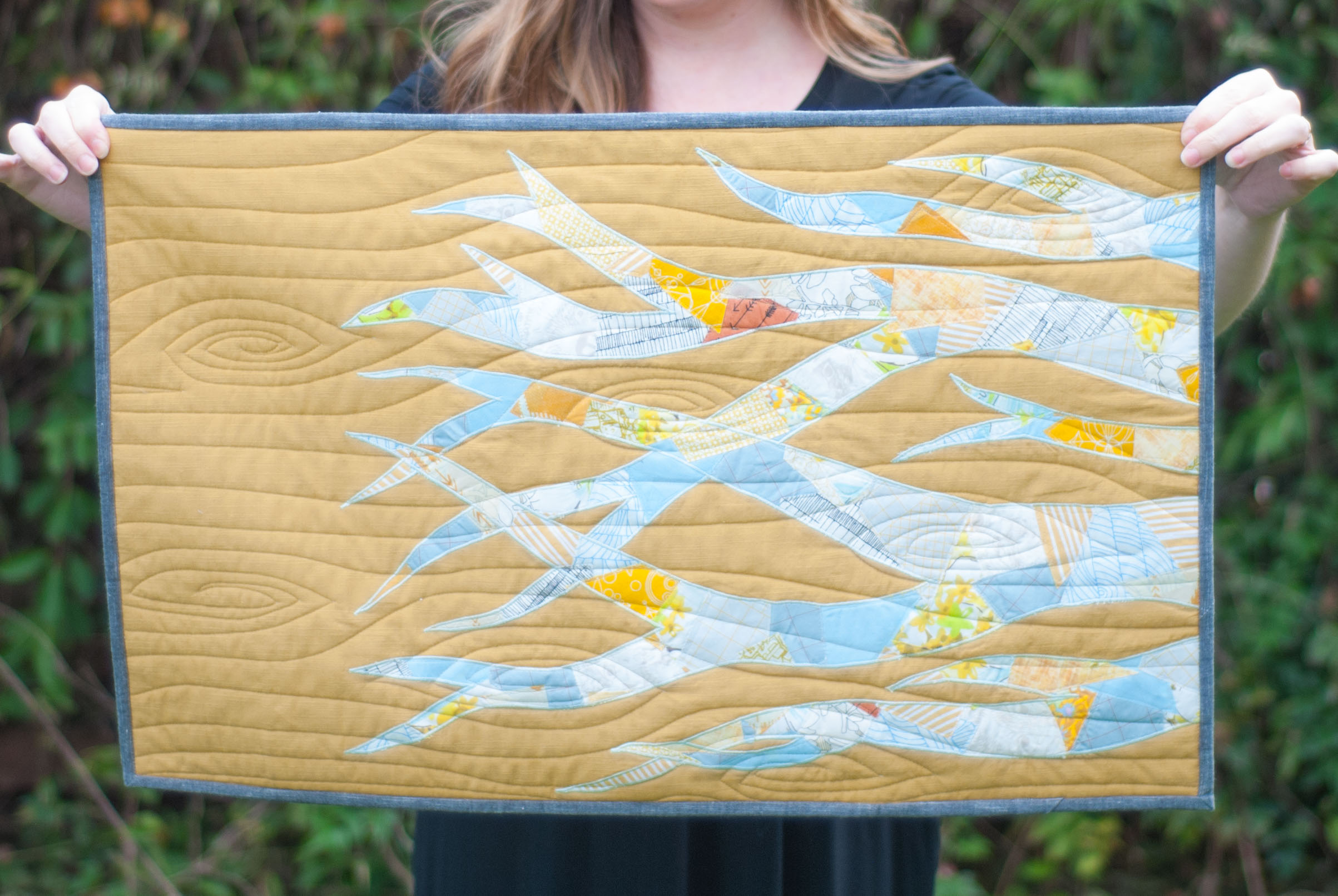
No perfect edges. No precision. No rules about what "goes." Just play.
This month in Meander, we're doing it together
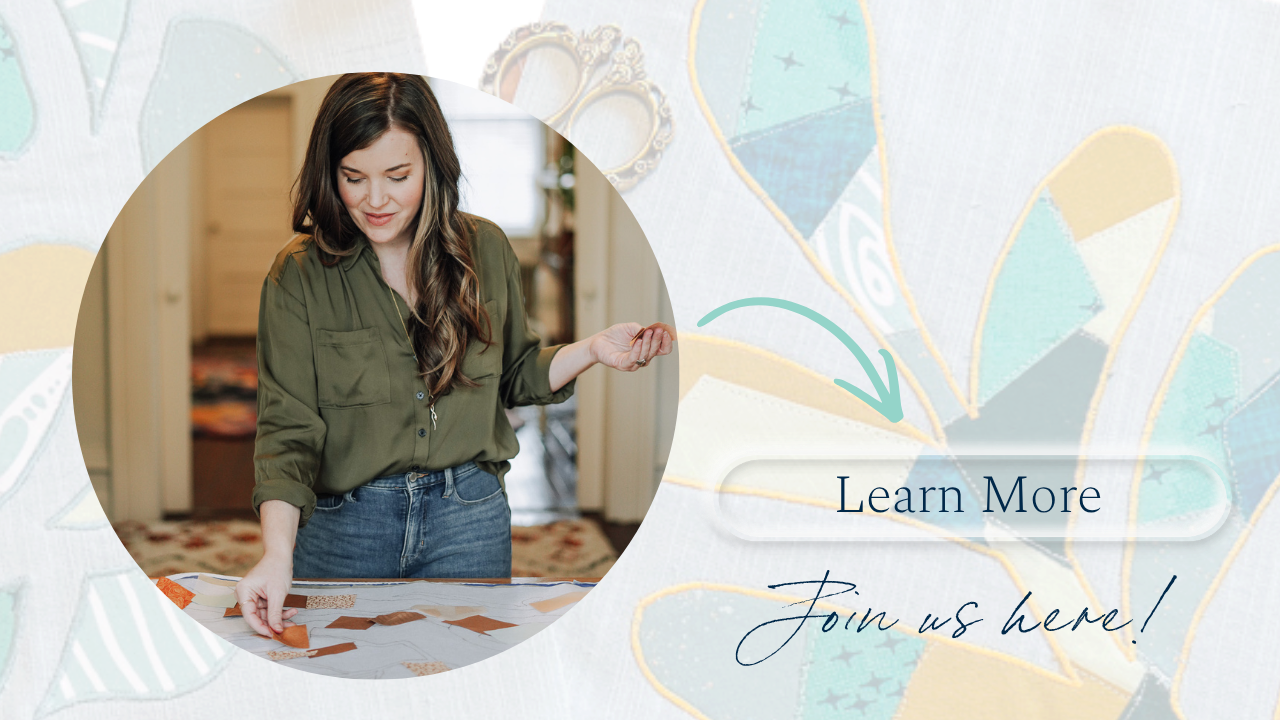
Scrappy Appliqué™ is our block of the month in Meander right now, and I designed two blocks so you can practice both styles of Scrappy Appliqué design:
The leaf block — a simple silhouette, the same style as my animals and skylines. One shape, one beautiful scrap texture.
The rose print block — a multi-shape design, like Sasha and the map quilts, where several collaged pieces are placed just so on the background.
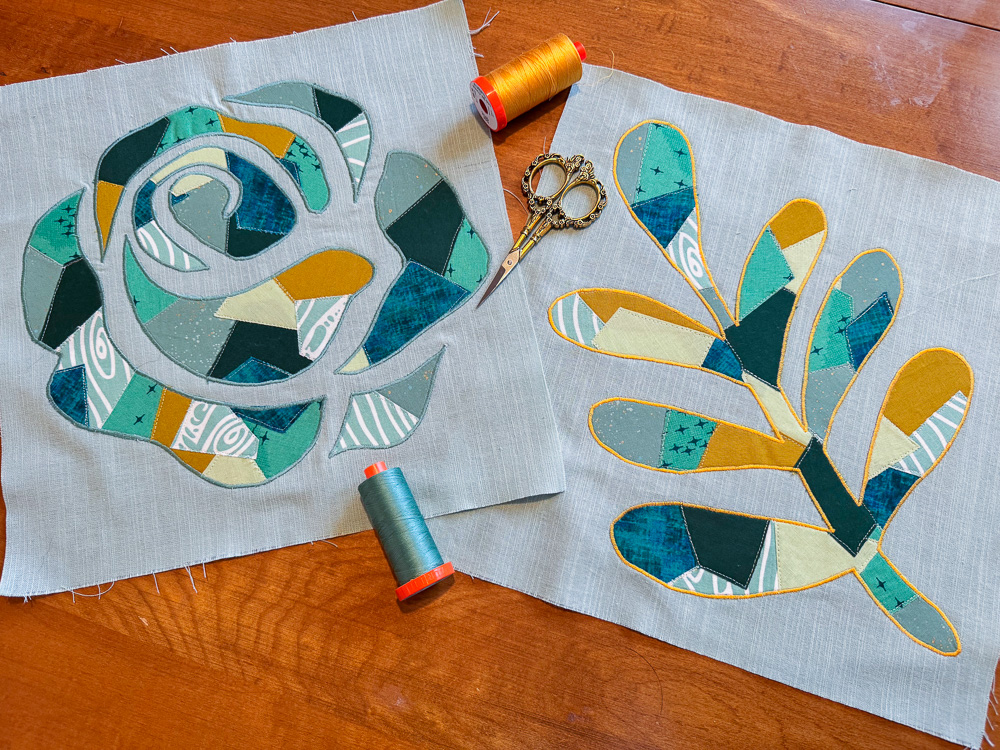
Once you've made both, there isn't a Scrappy Appliqué pattern out there you can't make. We'll be working on them together all month, with the full class and a whole community collaging alongside you.
And the truly tiny bits?
For the pieces under your line — the one-inch bits, the slivers you trim off bindings, the little triangles — it is genuinely okay to throw them away. You have my full permission. But if that feels criminal, here are some lovely alternatives:
- Make a shelter pet bed. Sew a simple pillowcase shape, keep it near your cutting table, and toss the tinies in as you trim. In a year or so it'll be full — sew the top closed and donate it to your local animal shelter. (Give them a quick call first; most shelters are delighted, and the dogs and cats could not care less whether your points matched.)
- Donate them to a hand papermaker. Here's one most quilters don't know: beautiful handmade paper is made from cotton rag — literally fabric scraps, beaten into pulp. Your 100% cotton bits are treasure to papermakers. Check for a book arts center, papermaking studio, or university book arts program near you (search "your city + book arts center" or "creative reuse center") — or if you know someone who makes their own paper, save them a baggie. Cotton and linen only; polyester doesn't pulp.
- Try a confetti quilt. Scatter the tiniest flecks over a background, lay tulle on top, and quilt over it — the bits become a painterly, textured surface. A whole technique built on "too small to save."
- Stuff a pincushion. Fabric bits make a dense, satisfying filling — no polyfill required.
Nothing wasted, nothing guilty. Every scrap gets a job — or a graceful goodbye.
Now I'd love to hear from you: what's your number? How small do you save — and what's the scrap you've been holding onto the longest? Come tell me in the comments on Instagram or Facebook — I read every one.